When we think about the CrossFit Games season, we picture the big names like Tia Toomey and Jayson Hopper. We picture heavy barbells, dramatic finishes, and athletes crowned “Fittest on Earth.” But alongside the competition most of us see on social media is another equally intense, equally competitive season: the Adaptive CrossFit Games.
Adaptive CrossFit isn’t a watered-down version of the sport. It is elite-level competition, rigorous training, and a powerful community, designed for athletes with permanent physical or cognitive impairments.
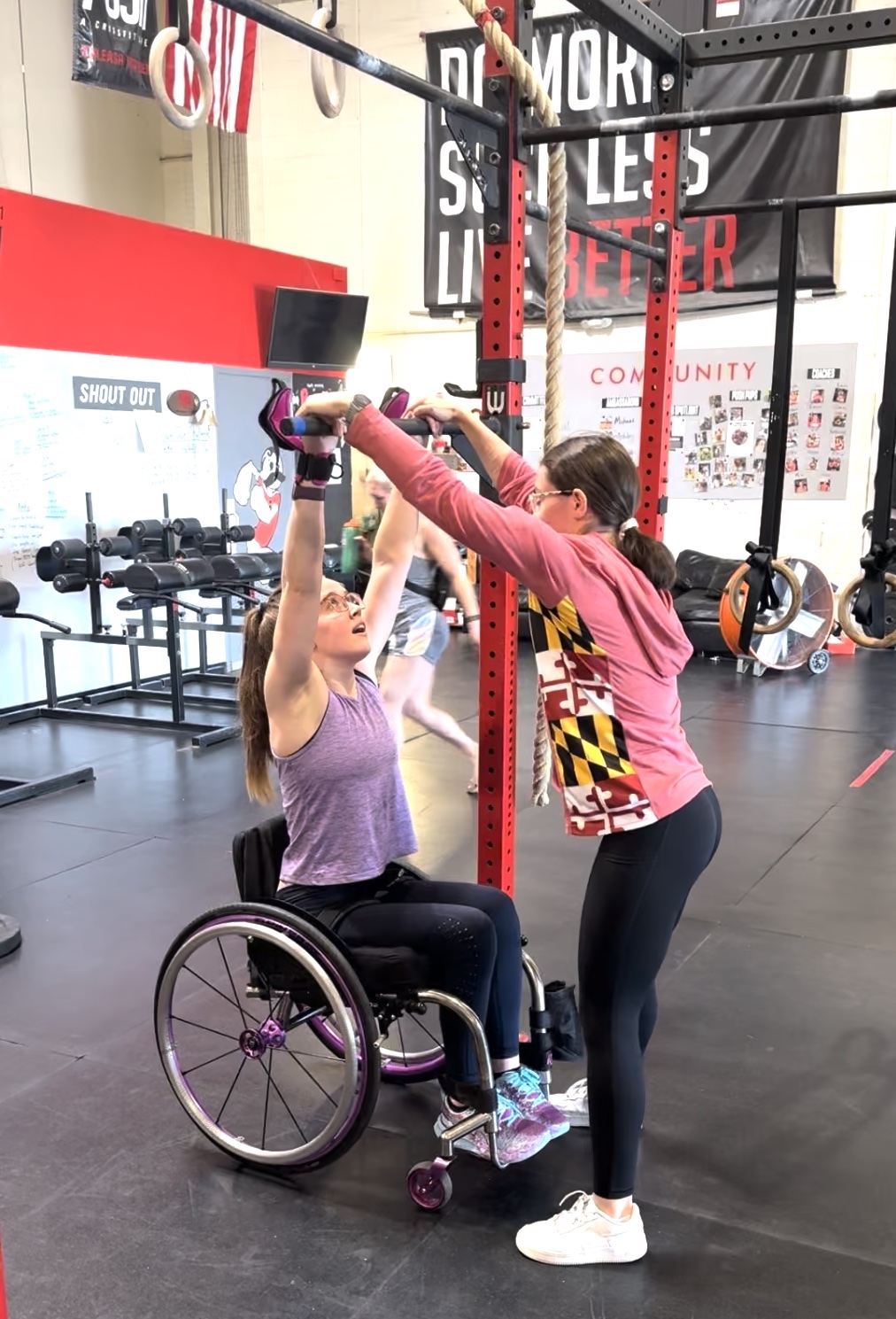
I have had the wonderful opportunity to work with adaptive athletes (two of which competed in the Adaptive Games in 2024 and 2025, and another who made it to semifinals!) and want to share some of the things that I have learned from them that I think all gym goers should hear.
What is Adaptive CrossFit?
An adaptive athlete is defined by the Adaptive Training Academy as “a person with a permanent impairment(s) that causes a limitation(s) that affects work capacity.”
The Adaptive CrossFit Games follows the same structure as the CrossFit Games season: a worldwide Open, Quarterfinals, Semifinals, and ultimately the Games. Athletes compete within divisions based on similar functional impairments. There are 16 divisions, generally grouped into:
The programming maintains competitive integrity while adapting movements appropriately so athletes can express strength, endurance, power, and skill at the highest level.
My Experience Working With Adaptive Athletes:
I have spent the last year coaching adaptive athletes through the program BMore Adaptive Training run out of the CrossFit gym PUSH 511 in Baltimore City. I started working with BMore Adaptive through my Senior Project during my last year of high school and have continued since. I have coached both group crossfit classes and done 1-on-1 training, as well as helped run MURPH and Open workouts. Through BMore Adaptive I even had the opportunity to work at the Adaptive CrossFit Games last year in Las Vegas.
What Every Athlete Can Learn:
Working with adaptive athletes has taught me so much about myself, about the lives of people with disabilities, and about the fitness world in general. I think that some of these lessons are important for all of us to hear as we embark on our individual journeys, fitness and otherwise.
Can vs. Can’t Mindset: Society often focuses on what people with disabilities can’t do. Working with BMore Adaptive has shown me just a fraction of the things they can do. This Games season I encourage you to watch an event from the Adaptive Games and see for yourself some of the crazy impressive strength these athletes have!
It is important that as a society we shift the narrative of disability from can’t to can, but we can also shift that mindset for ourselves too. When faced with challenges our brains often jump to thinking “I can’t.” The more we speak to ourselves that we can do something, the more likely it is that we will succeed!
Show Up as YOU: People with disabilities are often the only one in the room like themselves. Especially in fitness spaces. You can imagine how isolating and uncomfortable that must be. Yet disabled individuals can’t let that feeling rule their lives. Instead, adaptive athletes show up to the gym exactly how they are. They show up ready to learn, ready to challenge their minds and bodies, ready to enjoy the community CrossFit has to offer. There is power in showing up despite our worries. I hope that we can all work to have the same tenacity and courage to show up as ourselves as we engage in our passions that I see from adaptive athletes.
Let the Ego Go: Fitness looks different for everyone. For adaptive athletes, movements may be modified or swapped. Reps or loads might be adjusted. But does that make the workout less effective? Does that make the athlete less worthy of being there?
Nope! Good adaptive programming preserves the intended stimulus of the workout. The goal isn’t to make it easier – it’s to make it accessible and effective.
There’s a lesson here for all of us. I know everyone wants to write RX in Push Press but if you have to scale or swap movements, once or all the time, do it with confidence. Scaling and adapting are different (that’s for another time), but neither is something to be ashamed of. Adaptive athletes demonstrate every day that fitness is about effort, intention, and growth, not ego.
Why This Matters To Our Community:
Adaptive CrossFit isn’t separate from CrossFit. It’s part of it. At its core, CrossFit is about functional movement, intensity relative to the individual, and community. Adaptive training embodies all of that.
Whether or not you identify as an adaptive athlete, every single one of us benefits from an environment that values inclusion, creativity, and resilience.
The next time you’re tempted to doubt yourself, to hide behind ego, or to skip class because you’re not feeling 100%, think about the athletes who show up every day in spaces not designed for them and train anyway. That’s what fitness is really about. And that’s something worth learning from.


.jpg)

.jpg)